Myo-Inositol for Thyroid: Does It Help Hashimoto’s?
By StopTheFlare Research Team · Updated June 7, 2026
If you have Hashimoto’s and have gone down the supplement rabbit hole, you have probably seen myo-inositol mentioned — usually paired with selenium. Unlike most thyroid supplements, this one actually has human trial data behind it. Here is an honest look at what myo-inositol does, what the studies found, and whether it is worth adding to your protocol.
What is myo-inositol?
Inositol is a sugar-like molecule your body uses as a messenger inside cells. Myo-inositol, the most common form, plays a key role in how cells respond to certain hormones — including TSH, the signal your pituitary sends to your thyroid. When that signaling works smoothly, your thyroid responds to TSH efficiently. The theory is that supporting this pathway could help a struggling thyroid work better and ease the immune attack in Hashimoto’s.
What the research shows
The most-cited work comes from a series of Italian studies pairing myo-inositol with selenium in people who had Hashimoto’s and subclinical hypothyroidism (mildly elevated TSH, normal thyroid hormones).
TSH and antibodies
In these trials, the combination of myo-inositol plus selenium lowered TSH and reduced thyroid antibodies (TPO and Tg) more than selenium alone, while some participants also reported better wellbeing. The effect was most consistent in people whose TSH was elevated but not yet in full hypothyroid range.
The important caveats
These studies were relatively small, mostly from the same research groups, and often used a specific myo-inositol plus selenium product. That does not make the findings worthless — but it does mean the evidence is promising rather than definitive. Myo-inositol is not a replacement for thyroid medication if you genuinely need it.
Who is most likely to benefit
Based on the trial populations, myo-inositol is most worth considering if you have Hashimoto’s with subclinical hypothyroidism — raised TSH, antibodies present, but thyroid hormone still normal — and you are not yet on levothyroxine. If your labs confuse you, our guide to reading thyroid labs breaks down TSH, free T4, free T3, and antibodies in plain language.
It may also appeal to people who already take selenium for antibodies and want to layer in something with complementary evidence. Women with PCOS-related insulin issues alongside Hashimoto’s sometimes have an extra reason to consider inositol, since it is also studied for insulin sensitivity — but that is a conversation for your doctor.
How it is typically used
In the studies, the common approach was 600 mg of myo-inositol combined with 83 mcg of selenium, once daily. A myo-inositol supplement that also includes D-chiro-inositol covers the inositol side, and you can pair it with a dedicated selenium like selenomethionine, the form shown in trials to lower TPO antibodies. Take selenium with food and stay near the studied dose — more is not better, and chronically high selenium has its own risks.
Myo-inositol is generally very well tolerated; at higher doses some people notice mild digestive upset, which usually settles or resolves by lowering the dose.
Where it fits in a Hashimoto’s protocol
Think of myo-inositol as a supporting player, not the foundation. The core of any Hashimoto’s plan is appropriate medical care, addressing real deficiencies, and the basics covered in our best supplements for Hashimoto’s roundup. Inositol is a reasonable, evidence-supported addition for the right person — not a cure, and not a substitute for treatment.
As always, talk to the clinician who manages your thyroid before adding it, especially if you are on medication, since lowering TSH could eventually mean your dose needs adjusting. For the full picture, read our complete Hashimoto’s supplement protocol.
The bottom line
Myo-inositol, especially paired with selenium, is one of the few thyroid supplements with actual human trial data showing lower TSH and antibodies in subclinical Hashimoto’s. The evidence is encouraging but still limited, so treat it as a well-supported add-on for the right person rather than a guaranteed fix — and keep your doctor in the loop.
Frequently Asked Questions
- Does myo-inositol lower thyroid antibodies?
- In several small trials, myo-inositol combined with selenium lowered TPO and Tg antibodies more than selenium alone in people with Hashimoto’s and subclinical hypothyroidism. The studies are promising but limited in size and largely from the same research groups, so the effect is best described as supported rather than proven.
- How much myo-inositol should I take for Hashimoto’s?
- The studied protocol used 600 mg of myo-inositol with 83 mcg of selenium once daily. Stick close to these amounts rather than mega-dosing, take selenium with food, and confirm with your doctor before adding it — especially if you take thyroid medication.
- Can I take myo-inositol with levothyroxine?
- Generally yes, but it should be supervised. Because myo-inositol may lower TSH, your medication dose could eventually need adjusting, so your thyroid should be monitored. Always clear new supplements with the clinician who manages your treatment.
- Is myo-inositol safe?
- It is well tolerated for most people. The main side effect at higher doses is mild digestive upset, which usually resolves by lowering the dose. The bigger caution is the selenium it is often paired with — keep selenium near the studied dose, since too much over time can be harmful.
Related products
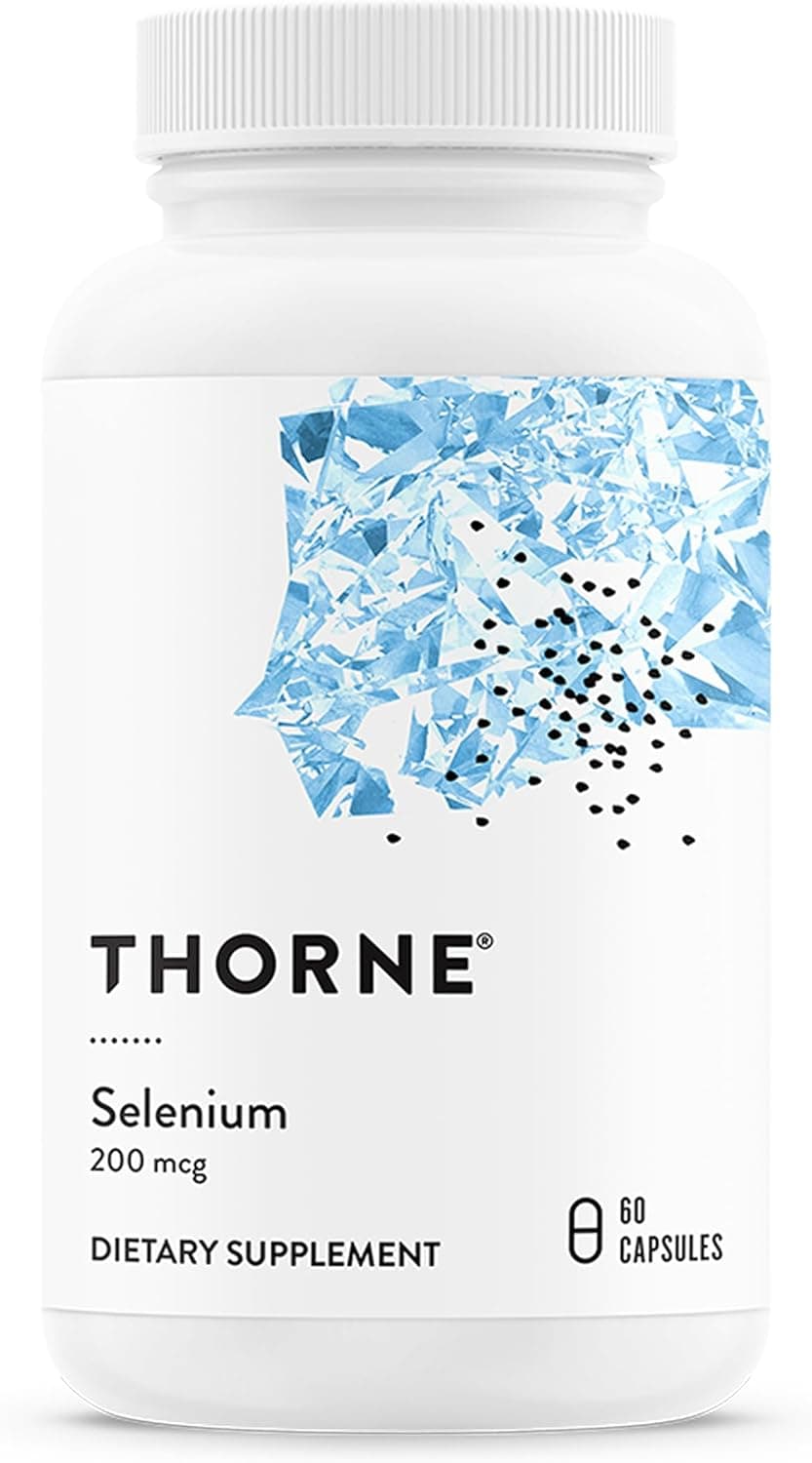
Thorne Selenium (Selenomethionine)
Thorne
The most evidence-backed product on this list — 200 mcg selenomethionine is the exact form shown to lower TPO antibodies in randomized trials.
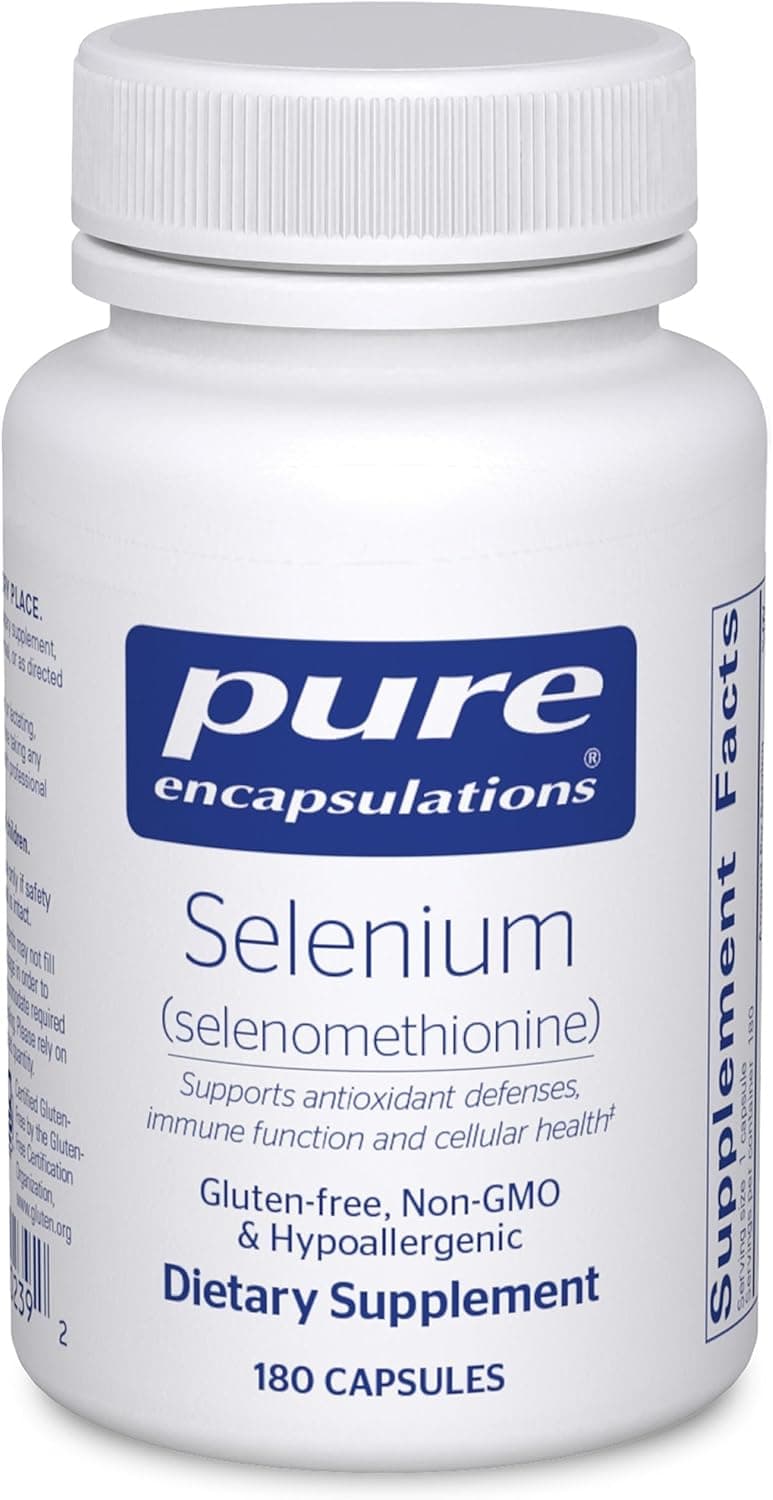
Pure Encapsulations Selenium (Selenomethionine)
Pure Encapsulations
Essentially the same clinical-grade selenomethionine as Thorne at a lower price — best value in the most critical Hashimoto's category.
Want the full picture? Read our complete Hashimoto's supplement protocol.