Vitamin D for Psoriasis: How Much to Take and Why It Helps
By StopTheFlare Research Team · Updated May 16, 2026
Of all the supplements discussed for psoriasis, vitamin D has perhaps the most compelling rationale — because we already know it works *topically*. Prescription psoriasis creams like calcipotriol are vitamin D analogues. That alone tells you this nutrient is deeply involved in the condition. The question is what oral vitamin D can do, and how to use it well.
This guide covers the mechanism, the evidence, the blood level to target, and safe dosing. For the complete approach, see our eczema and skin protocol.
Why vitamin D matters in psoriasis
Psoriasis is driven by an overactive immune response that makes skin cells multiply far too fast, piling up into plaques. Vitamin D does two relevant things: it helps regulate the immune system (calming the overactivity) and it slows the excessive turnover of skin cells. That is precisely why vitamin D-based creams reduce plaques — and why systemic vitamin D status is relevant too.
What the research shows
People with psoriasis are more likely to be vitamin D deficient, and lower levels tend to track with more severe disease. Correcting a deficiency is associated with improvement for many, and flares often worsen in winter when sun exposure (and skin vitamin D production) drops. The strongest benefit is seen in those who start out deficient — which is common.
The blood level to aim for
Do not guess — test. Ask for a 25-hydroxy vitamin D blood test. Most people with inflammatory skin conditions feel best with a level in the 40–60 ng/mL range. That target tells you how much to take, because the right dose depends entirely on where you are starting.
How to dose it safely
Most adults need somewhere between 1,000 and 5,000 IU per day of D3 to reach and maintain that range, but the only way to dose correctly is to test, supplement, and retest in about 3 months. Two practical tips:
Pair D3 with K2
Vitamin K2 helps direct calcium into bone rather than soft tissue, which is sensible insurance when taking higher D3 doses. A combined liquid like Thorne Vitamin D + K2 makes titrating easy. Our vitamin D for psoriasis cluster covers the details.
Consider cod liver oil for a two-in-one
If you also want the anti-inflammatory omega-3s that help skin, cod liver oil supplies vitamin D alongside EPA, DHA, and vitamin A — a traditional, food-based way to cover several skin nutrients at once. Just account for its D content in your total.
Don’t take more thinking more is better
Vitamin D is fat-soluble and can accumulate. Mega-dosing without testing risks toxicity (high calcium, kidney strain) and offers no extra benefit once you are in range. Test, dose to target, retest — that is the entire game.
Putting it together
Vitamin D belongs near the top of any psoriasis supplement plan because its mechanism is so well established. Pair it with omega-3s to lower inflammatory tone, support the skin barrier topically, and address the gut-skin axis. The full tiered plan is in our eczema and skin protocol, and you can go deeper on fish oil for skin inflammation.
Frequently Asked Questions
- How much vitamin D should I take for psoriasis?
- Most adults need roughly 1,000 to 5,000 IU of D3 per day, but the correct dose depends on your starting blood level. Aim for a 25-hydroxy vitamin D level around 40 to 60 ng/mL, then test, supplement, and retest in about three months. Pair D3 with K2, and avoid mega-dosing without testing, since vitamin D can accumulate.
- Does vitamin D really help psoriasis?
- There is a strong rationale: prescription psoriasis creams are vitamin D analogues, because vitamin D both calms immune overactivity and slows the excessive skin-cell turnover that forms plaques. People with psoriasis are often deficient, lower levels track with more severe disease, and correcting a deficiency is associated with improvement — especially in those who start out low.
- Should I take vitamin K2 with vitamin D?
- It is sensible, especially at higher D3 doses. Vitamin K2 helps direct calcium into bone rather than soft tissue and arteries, which provides a margin of safety. Many products combine D3 and K2 for this reason, making it easy to take them together.
- Can I get too much vitamin D?
- Yes. Vitamin D is fat-soluble and can build up, so chronic mega-dosing without testing risks toxicity — elevated calcium and kidney strain — with no added benefit once you are in the optimal range. The safe approach is to test your level, dose to a target of 40 to 60 ng/mL, and retest periodically.
Related products
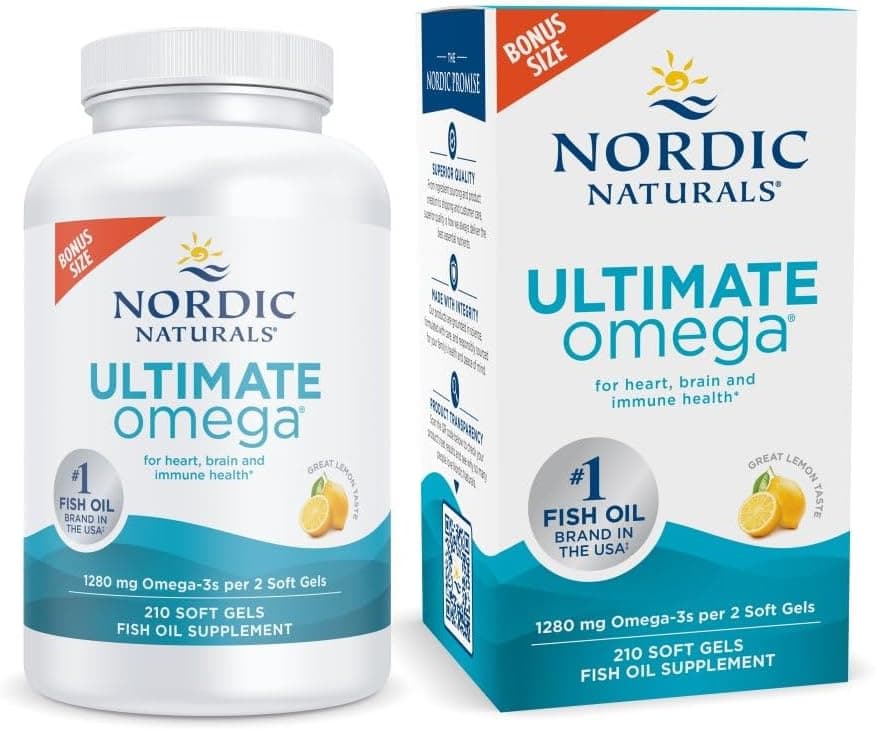
Nordic Naturals Ultimate Omega
Nordic Naturals
The most-reviewed triglyceride-form fish oil on Amazon (4.7★, 24k+ ratings) — the benchmark anti-inflammatory omega-3 across all five conditions.
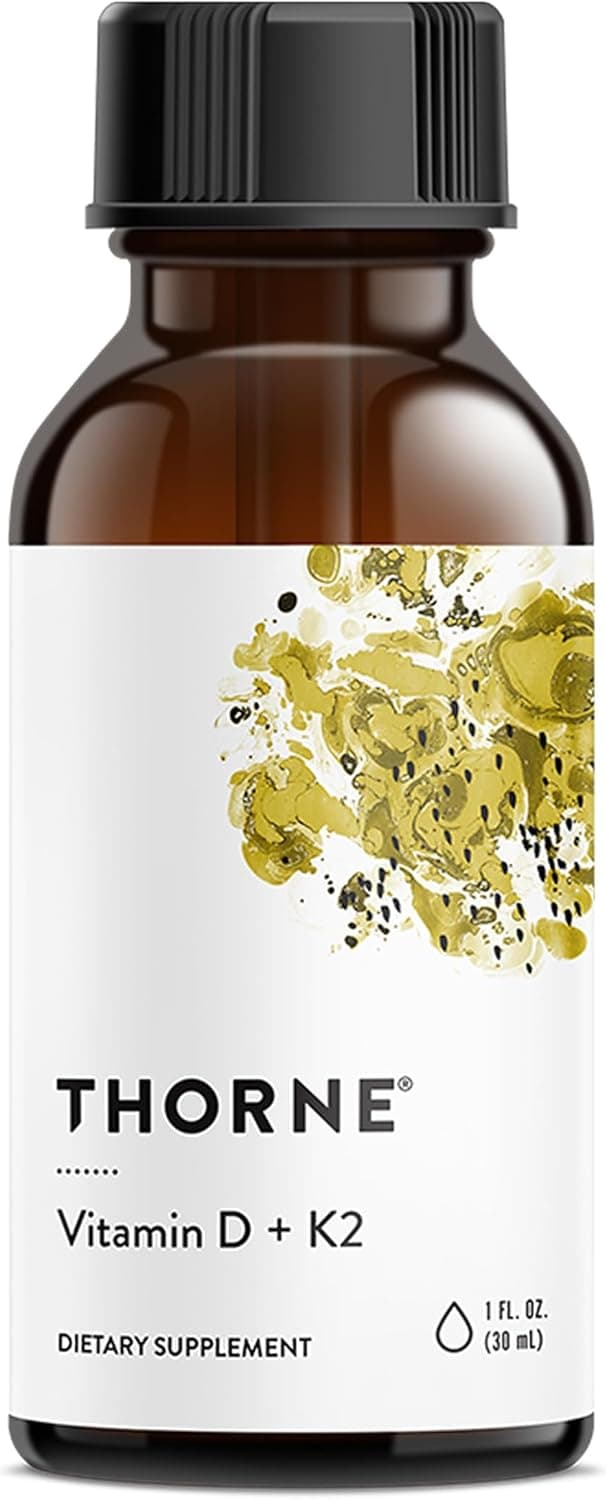
Thorne Vitamin D + K2 Liquid
Thorne
Flexible metered-drop liquid D3/K2 from a third-party certified brand — vitamin D deficiency correlates strongly with higher thyroid antibodies and worse skin.
Want the full picture? Read our complete Eczema & Skin supplement protocol.