Still Tired on Levothyroxine? Why Your Hypothyroid Symptoms Persist
By StopTheFlare Research Team · Updated June 6, 2026
You take your levothyroxine every morning, your doctor says your TSH is “in range,” and yet you are still dragging through the day — fatigued, foggy, losing hair, and cold all the time. If that is you, you are not imagining it, and you are far from alone. A normal TSH does not guarantee you feel normal.
There are several well-understood reasons hypothyroid symptoms persist despite treatment. Understanding them helps you have a more productive conversation with your prescriber. For the complete clinical context, see our Hashimoto’s protocol and thyroid labs to track.
1. “Normal” TSH isn’t the same as optimal
Lab reference ranges are wide, and many people feel best with a TSH in the lower part of the range rather than just barely inside it. A TSH of 3.5 may be “normal” on paper while leaving you symptomatic. This is worth discussing — some clinicians aim for a tighter target in treated patients, especially when symptoms persist.
2. You may not be converting T4 to T3
This is the big one. Levothyroxine is T4 — an inactive storage hormone. Your body has to convert it into T3, the active hormone your cells actually use. If that conversion is impaired, you can have plenty of T4 (and a normal TSH) while your tissues are effectively under-thyroid.
What conversion depends on
The enzymes that convert T4 to T3 require specific nutrients — notably selenium and zinc. A deficiency throttles conversion. This is why correcting these minerals can improve symptoms even when your dose has not changed. A studied selenium supplement at 200 mcg and zinc at 30 mg are reasonable foundations; our T3/T4 guide explains the conversion pathway in plain language.
3. Your labs are incomplete
A lone TSH tells you very little. To understand persistent symptoms, you generally want free T4, free T3, and reverse T3 alongside TSH — plus the deficiency labs below. Ask whether a fuller panel is appropriate; the single-TSH approach is exactly why so many people stay stuck.
4. The deficiencies that masquerade as “thyroid fatigue”
Three deficiencies mimic hypothyroid symptoms almost perfectly and frequently travel with Hashimoto’s:
Low iron (ferritin) — causes fatigue and hair loss and also impairs thyroid hormone use. Get ferritin tested before supplementing; if low, a gentle iron bisglycinate is easier on the gut. Low vitamin D — extremely common in autoimmune thyroid disease; dose vitamin D to a blood level of 40–60 ng/mL. Low B12 — causes fatigue and brain fog; Hashimoto’s often impairs absorption, so a methylated B12 helps.
5. Absorption and timing problems
Levothyroxine is finicky. Coffee, calcium, iron, and magnesium all blunt its absorption if taken too close together. Take it on an empty stomach and separate minerals by at least four hours. Inconsistent timing is a surprisingly common reason for stubborn symptoms.
What to actually do
Bring three things to your next appointment: a request for a full thyroid panel (not just TSH), deficiency labs (ferritin, vitamin D, B12), and a clear symptom list. In parallel, shore up the conversion cofactors — selenium and zinc — and correct any deficiencies you find. Give changes 8–12 weeks and retest. The full tiered plan is in our Hashimoto’s supplement protocol.
Persistent symptoms on levothyroxine are a signal to look deeper, not to accept feeling unwell as your new normal.
Frequently Asked Questions
- Why am I still tired if my TSH is normal?
- A normal TSH does not guarantee normal energy. You may not be converting the inactive T4 in levothyroxine into active T3, your TSH may be “normal” but not optimal, or you may have deficiencies — low iron, vitamin D, or B12 — that mimic hypothyroid fatigue. A fuller thyroid panel plus deficiency labs usually reveals the cause.
- What labs should I ask for besides TSH?
- Beyond TSH, ask about free T4, free T3, and reverse T3 to assess how well you are converting and using thyroid hormone, plus TPO antibodies. Add ferritin, vitamin D, and B12, since these deficiencies commonly cause persistent symptoms in Hashimoto’s and are easy to miss with a TSH-only approach.
- Can supplements help if levothyroxine isn’t enough?
- They can address the cofactors and deficiencies behind persistent symptoms. Selenium and zinc support T4-to-T3 conversion, and correcting low iron, vitamin D, or B12 often improves fatigue and brain fog even without a dose change. Supplements support — they do not replace — your medication, so keep taking it and retest labs.
- How should I take levothyroxine for best absorption?
- Take it on an empty stomach, ideally 30 to 60 minutes before food, and separate it from coffee, calcium, iron, and magnesium by at least four hours, since these blunt absorption. Consistent daily timing matters — erratic timing is a common and overlooked reason symptoms persist.
Related products
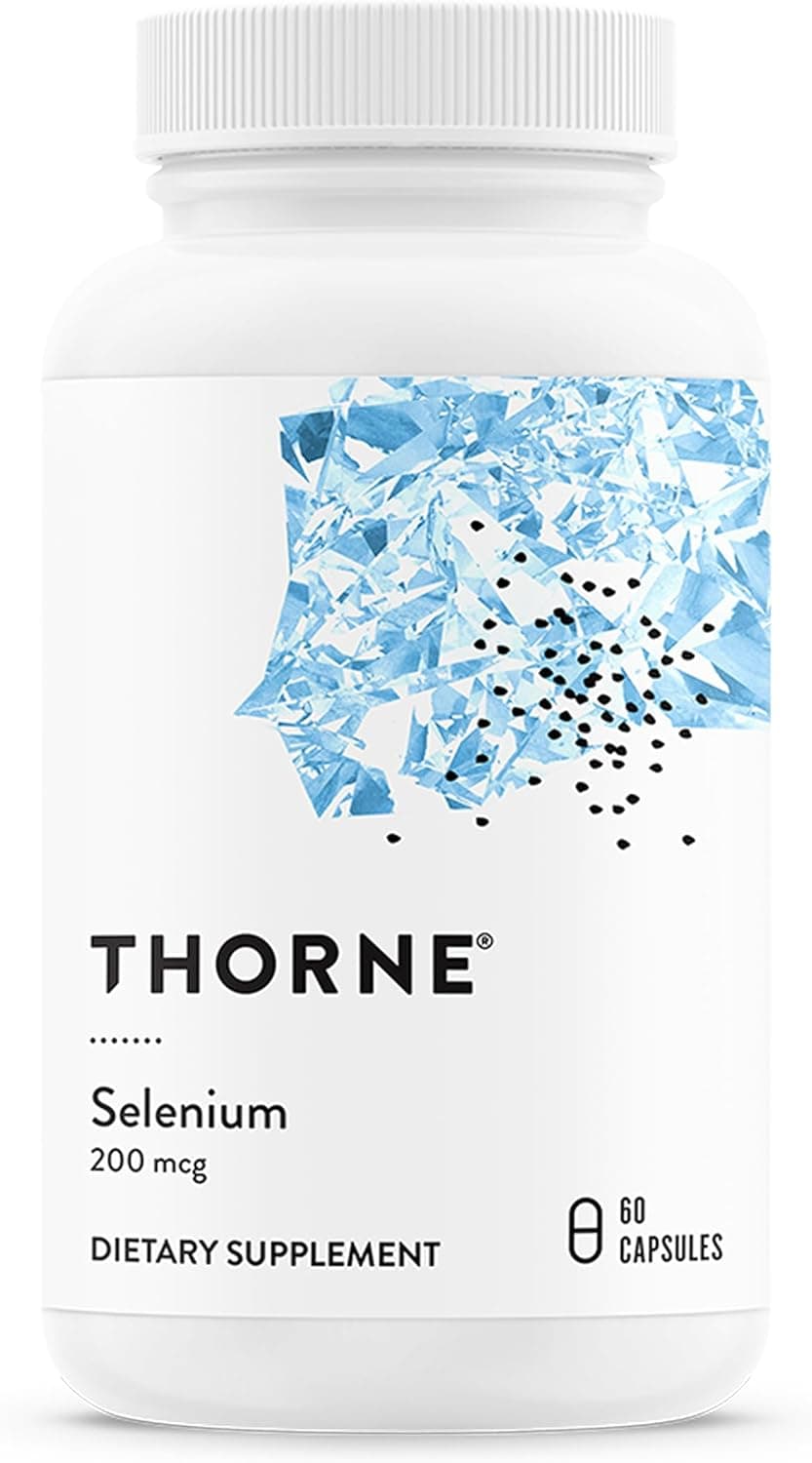
Thorne Selenium (Selenomethionine)
Thorne
The most evidence-backed product on this list — 200 mcg selenomethionine is the exact form shown to lower TPO antibodies in randomized trials.

Pure Encapsulations Selenium (Selenomethionine)
Pure Encapsulations
Essentially the same clinical-grade selenomethionine as Thorne at a lower price — best value in the most critical Hashimoto's category.
Want the full picture? Read our complete Hashimoto's supplement protocol.