Seed vs Visbiome vs Florastor: Which Probiotic Is Right for Your Gut?
By StopTheFlare Research Team · Updated June 1, 2026
Walk into any probiotic comparison and you will see the same names: Seed, Visbiome, and Florastor. They are all well-regarded — but they are not interchangeable. Each is built on a different philosophy, and choosing wrong is the fastest way to waste money on a probiotic that was never designed for your problem.
The golden rule, before we compare: the strain matters more than the brand, the price, or the CFU count. Different strains do different jobs. Here is how these three actually differ and who each suits best. For condition-specific picks, see our best probiotics for IBD guide.
Seed DS-01 — the daily-maintenance synbiotic
Seed is a broad-spectrum synbiotic (probiotic + prebiotic) designed for everyday gut and whole-body support rather than a single condition. Its multi-strain formula and acid-resistant capsule aim for consistent daily use in generally healthy people who want maintenance and resilience.
Best for: someone without a specific diagnosis who wants a quality daily probiotic for general gut health and regularity. Explore it via Seed DS-01.
Visbiome — the high-potency clinical heavyweight
Visbiome is the one to know if you have inflammatory bowel disease. It is a high-potency, 8-strain formula (the same formulation studied in ulcerative colitis and pouchitis research) delivering up to 112.5 billion CFU. This is not a casual daily product — it is a therapeutic-grade option, ideally used with a gastroenterologist.
Best for: ulcerative colitis, pouchitis, or significant IBD where the clinical evidence behind the specific formulation matters. Check Visbiome.
Florastor — the yeast that isn’t a bacterium
Florastor is different from the other two: its active ingredient is Saccharomyces boulardii, a beneficial yeast, not a bacterium. That matters for two reasons — it is not killed by antibiotics, making it the go-to for preventing antibiotic-associated diarrhea, and it has strong evidence for traveler’s diarrhea and acute GI upset.
Best for: anyone on antibiotics, prone to traveler’s diarrhea, or wanting an antibiotic-compatible probiotic. See Florastor.
Quick decision guide
If you want general daily maintenance, Seed fits. If you have diagnosed IBD, Visbiome’s clinical formulation earns its place. If you are on antibiotics or fighting acute diarrhea, Florastor’s S. boulardii is the logical pick. They can even be complementary — for example, running Florastor alongside a course of antibiotics.
A note for histamine-sensitive readers
If you have histamine intolerance or MCAS, tread carefully — some bacterial strains produce histamine and can worsen symptoms. A specialized formula is safer; see our low-histamine probiotics guidance before choosing.
The bottom line
There is no single “best probiotic” — only the best match for your goal. Ignore the CFU arms race, identify whether you need maintenance, IBD-grade support, or yeast-based protection, and pick accordingly. Then give it 8–12 weeks. For the full gut-repair picture, read our complete gut health protocol.
Frequently Asked Questions
- Is Seed or Visbiome better?
- It depends on your goal. Seed DS-01 is a broad-spectrum synbiotic built for general daily maintenance in healthy people. Visbiome is a high-potency, clinically studied formulation for inflammatory bowel disease like ulcerative colitis and pouchitis. If you have diagnosed IBD, Visbiome’s evidence is more relevant; for everyday support, Seed is the simpler choice.
- What makes Florastor different from other probiotics?
- Florastor’s active ingredient is Saccharomyces boulardii, a beneficial yeast rather than a bacterium. Because it is a yeast, antibiotics do not kill it, which makes it the standout choice for preventing antibiotic-associated diarrhea and for traveler’s diarrhea — situations where bacterial probiotics would be wiped out.
- Can I take more than one probiotic at once?
- Often yes, when they serve different purposes — for example, taking Florastor (S. boulardii) during a course of antibiotics alongside a bacterial probiotic. The key is matching each product to a clear goal rather than stacking random high-CFU blends. If you are histamine-sensitive, choose strains carefully.
- Does a higher CFU count mean a better probiotic?
- No. Strain selection matters far more than the CFU number on the label. A 100-billion CFU blend of random strains is not better than a clinically studied product at a lower count. Match the strain to your condition or goal, start low, and give it 8 to 12 weeks before judging results.
Related products
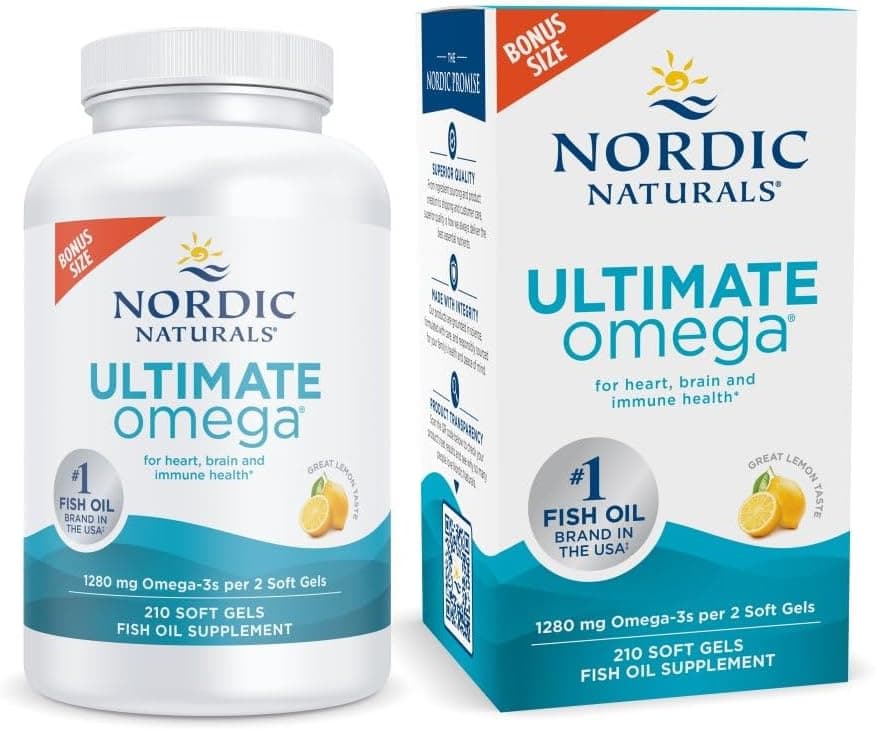
Nordic Naturals Ultimate Omega
Nordic Naturals
The most-reviewed triglyceride-form fish oil on Amazon (4.7★, 24k+ ratings) — the benchmark anti-inflammatory omega-3 across all five conditions.
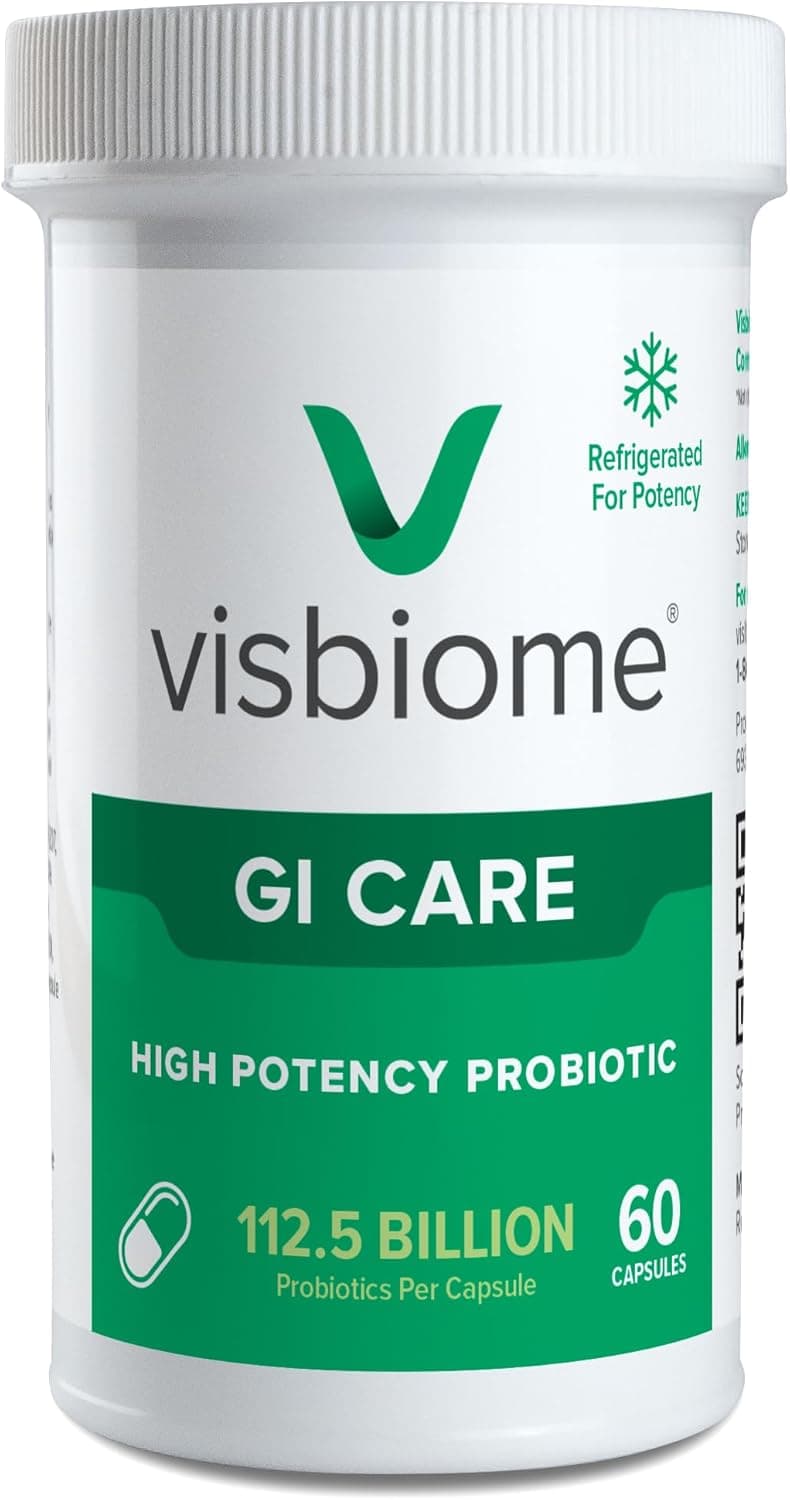
Visbiome High Potency Probiotic
Visbiome
The original De Simone formulation with 100+ human clinical trials — the single most evidence-backed probiotic for ulcerative colitis remission maintenance.
Want the full picture? Read our complete Gut Health supplement protocol.