Magnesium Glycinate vs Malate: Which Is Better for Fibromyalgia?
By StopTheFlare Research Team · Updated May 14, 2026
Magnesium is one of the most useful supplements for fibromyalgia — deficiency is common, and it sits at the center of both muscle function and cellular energy. But once you decide to take it, you hit a confusing wall of forms: glycinate, malate, citrate, oxide, threonate. For fibromyalgia, the two that matter most are glycinate and malate, and they are genuinely suited to different problems.
This guide breaks down which to choose and when. For the broader plan, see our fibromyalgia and chronic fatigue protocol.
First, why form matters at all
Magnesium is always bound to something, and what it is bound to changes how well you absorb it and what *secondary* benefits you get. Magnesium oxide — the cheap form in most drugstore products — is poorly absorbed and mainly acts as a laxative. Skip it. Glycinate and malate are both well-absorbed; the difference is in the partner molecule.
Magnesium glycinate — the calming one
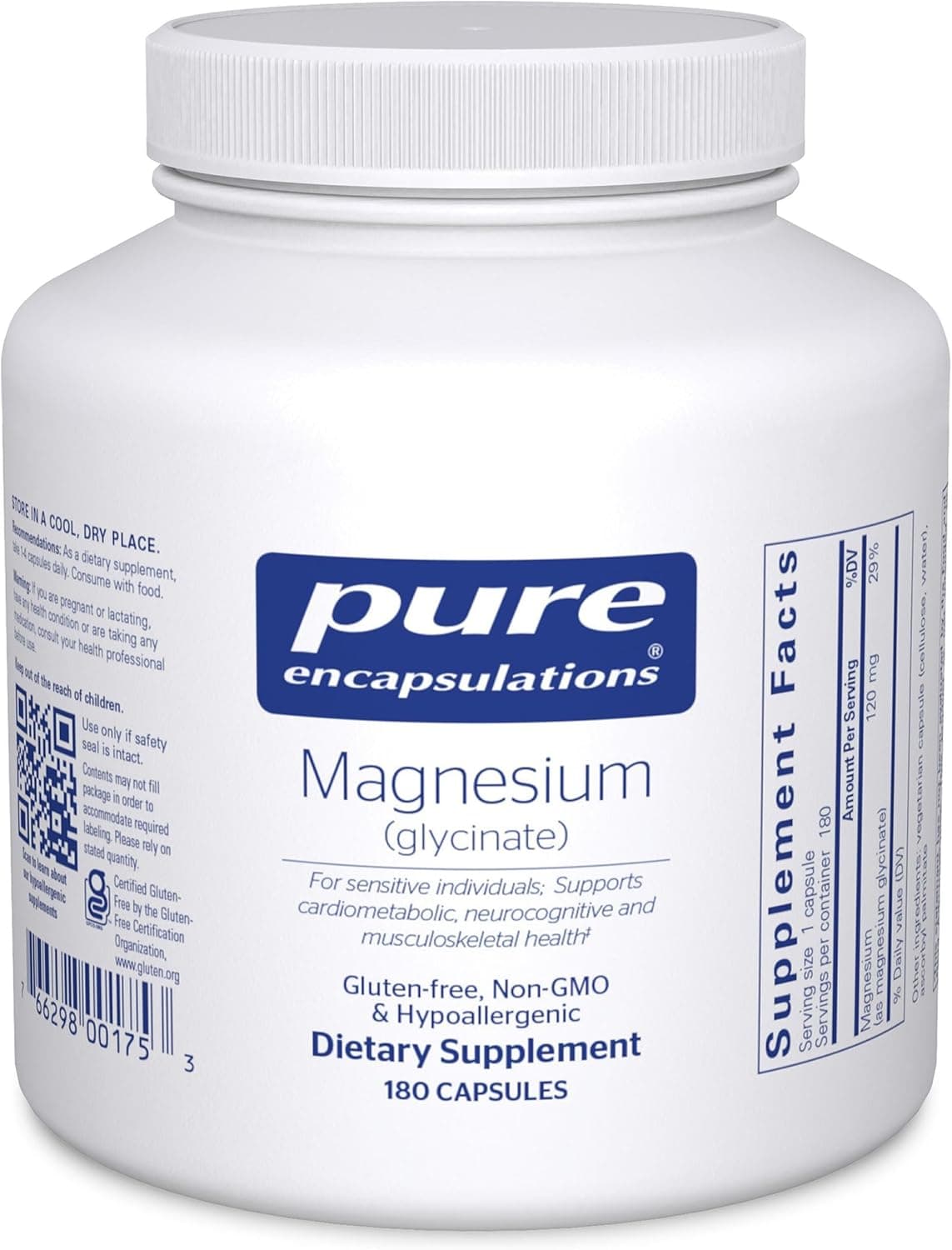
Glycinate is magnesium bound to glycine, a calming amino acid that supports relaxation and sleep. This combination is gentle on the stomach (no laxative effect) and tends to soothe the nervous system. For fibromyalgia, that makes glycinate the go-to for evening use, poor sleep, anxiety, and muscle tension. A clean option is Pure Encapsulations Magnesium Glycinate; see our sleep supplements guide for how it fits a nighttime routine.
Magnesium malate — the energy-and-pain one
Malate is magnesium bound to malic acid, a molecule that is itself part of the cellular energy (Krebs) cycle. That pairing is why malate is the form most associated with fibromyalgia specifically — it has been studied for pain, muscle tenderness, and daytime energy. Because it can be mildly energizing, many people prefer it earlier in the day. Source Naturals Magnesium Malate is a popular choice; our magnesium malate review digs into the research.
Head-to-head: which should you choose?
Match the form to your dominant problem:
Choose glycinate if…
Your biggest issues are poor sleep, anxiety, nighttime muscle cramps, or tension. Take it in the evening.
Choose malate if…
Your biggest issues are widespread pain, tender points, and daytime fatigue. Take it earlier in the day.
Or use both — it’s a common strategy
These are not mutually exclusive. A very common fibromyalgia approach is malate in the morning for energy and pain, glycinate at night for sleep and relaxation. Just keep an eye on your total elemental magnesium and back off if you get loose stools — that is the sign you have hit your gut’s limit.
Bottom line
Both beat the poorly absorbed oxide form by a mile. Glycinate calms and helps you sleep; malate targets pain and daytime energy. Choose by your main symptom — or run both at different times of day. Either way, magnesium works best alongside the rest of an energy-first plan: see the full fibromyalgia protocol.
Frequently Asked Questions
- Is magnesium glycinate or malate better for fibromyalgia?
- It depends on your main symptom. Glycinate is bound to calming glycine and is best for sleep, anxiety, and muscle tension, taken in the evening. Malate is bound to malic acid, which feeds cellular energy, and is the form most studied for fibromyalgia pain and daytime fatigue. Many people use malate in the morning and glycinate at night.
- Can I take magnesium glycinate and malate together?
- Yes, and it is a common fibromyalgia strategy — malate earlier in the day for energy and pain, glycinate in the evening for sleep and relaxation. Just track your total elemental magnesium across both and reduce the dose if you develop loose stools, which signals you have reached your gut’s tolerance.
- Why not just use cheap magnesium oxide?
- Magnesium oxide, the cheap form in most drugstore supplements, is poorly absorbed and acts mainly as a laxative, so little of it reaches your tissues. Glycinate and malate are far better absorbed and provide useful secondary benefits from their partner molecules, making them much better choices for fibromyalgia.
- When should I take each form of magnesium?
- Take magnesium glycinate in the evening, since glycine supports relaxation and sleep. Take magnesium malate earlier in the day, since malic acid can be mildly energizing and the form targets pain and daytime fatigue. Spacing them this way lets each do the job it is best suited for.
Related products

Nordic Naturals Ultimate Omega
Nordic Naturals
The most-reviewed triglyceride-form fish oil on Amazon (4.7★, 24k+ ratings) — the benchmark anti-inflammatory omega-3 across all five conditions.
Pure Encapsulations Magnesium Glycinate
Pure Encapsulations
The cleanest, best-tolerated magnesium glycinate available — 4.6★ from 2,700+ verified reviews, named best overall by multiple expert roundups.
Want the full picture? Read our complete Fibromyalgia supplement protocol.