Gluten and Hashimoto’s: Does Going Gluten-Free Actually Lower Antibodies?
By StopTheFlare Research Team · Updated June 4, 2026
Few topics in the Hashimoto’s world generate more heat than gluten. Some people swear that cutting it transformed their energy and dropped their antibodies; others go gluten-free for a year and notice nothing. So who is right? The honest answer is: it depends — and there is real science explaining why.
This guide walks through the actual mechanism, what the research does and does not support, and a structured way to test gluten for yourself. For the complete dietary picture, see our Hashimoto’s foods to avoid guide.
The molecular mimicry theory
The leading explanation is molecular mimicry. Gliadin, a protein in gluten, structurally resembles transglutaminase and parts of thyroid tissue. The theory: when your immune system attacks gluten, it can mistakenly cross-react with the thyroid, fueling the autoimmune process. This is why gluten gets singled out among foods — it is not just “inflammatory,” it may specifically resemble what your immune system is already attacking.
What the research actually shows
Here is where nuance matters. The strongest connection is between Hashimoto’s and celiac disease — the two co-occur far more than chance, and everyone with autoimmune thyroid disease should be screened for celiac. If you have celiac, strict gluten elimination is non-negotiable and clearly helps.
For non-celiac Hashimoto’s, the evidence is thinner but growing. A few small studies suggest a gluten-free diet may modestly lower thyroid antibodies in some patients, while others show no change. The realistic takeaway: gluten-free is not a guaranteed antibody-lowering strategy for everyone, but a subset of people respond meaningfully. The only way to know which group you are in is to test it properly.
How to test gluten the right way
Step 1: Get screened for celiac first
Before you cut gluten, ask your doctor for a celiac blood panel — because once you go gluten-free, the test becomes unreliable. If celiac is confirmed, you have your answer and lifelong elimination is warranted.
Step 2: Run a clean 8-to-12-week trial
If celiac is ruled out, commit to a genuinely strict gluten-free trial for 8–12 weeks — not “mostly.” Cross-contamination and hidden gluten (sauces, oats, seasonings) are why half-hearted attempts fail. Track your energy, brain fog, and digestion, and retest TPO antibodies at the start and end.
Step 3: Reintroduce and watch
After the trial, reintroduce gluten and pay attention. A clear return of symptoms tells you more than any internet anecdote. If nothing changes off or on gluten, you have saved yourself an unnecessary restriction.
Don’t lose the forest for the gluten
While you experiment with diet, keep the proven foundations in place. Correcting nutrient gaps does more for most people than any single food rule — selenium has actual randomized-trial data for lowering antibodies. A studied option like Thorne Selenium at 200 mcg is a sensible base; see our best selenium supplements breakdown. Magnesium, vitamin D, and zinc round out the full Hashimoto’s protocol.
Bottom line
Gluten-free is worth a structured trial for Hashimoto’s — mandatory if you have celiac, potentially helpful for a subset otherwise. But test it deliberately rather than adopting it forever on faith, and do not let the gluten debate distract you from the nutrient foundations that reliably move the needle.
Frequently Asked Questions
- Should everyone with Hashimoto’s go gluten-free?
- Not necessarily. It is essential if you also have celiac disease — which is more common in Hashimoto’s and should be screened for — and a subset of non-celiac patients see modestly lower antibodies. The best approach is a strict 8-to-12-week trial with antibody testing before and after, rather than a permanent restriction on faith.
- How long before a gluten-free diet lowers thyroid antibodies?
- If you respond, changes in antibodies and symptoms typically show over 8 to 12 weeks of strict elimination. The trial has to be genuinely strict — hidden gluten and cross-contamination are the main reasons half-hearted attempts show nothing. Retest TPO antibodies at the start and end to measure the effect objectively.
- Why is gluten linked to Hashimoto’s specifically?
- The leading theory is molecular mimicry: gliadin in gluten structurally resembles thyroid tissue and the enzyme transglutaminase, so an immune response to gluten may cross-react with the thyroid. There is also a strong real-world overlap between Hashimoto’s and celiac disease, which is why screening for celiac is recommended.
- Should I get tested for celiac before going gluten-free?
- Yes — always test first. Celiac blood tests become unreliable once you have removed gluten from your diet, so screening must happen while you are still eating it. If celiac is confirmed, strict lifelong elimination is warranted; if not, you can run a structured trial to see whether gluten affects your thyroid.
Related products
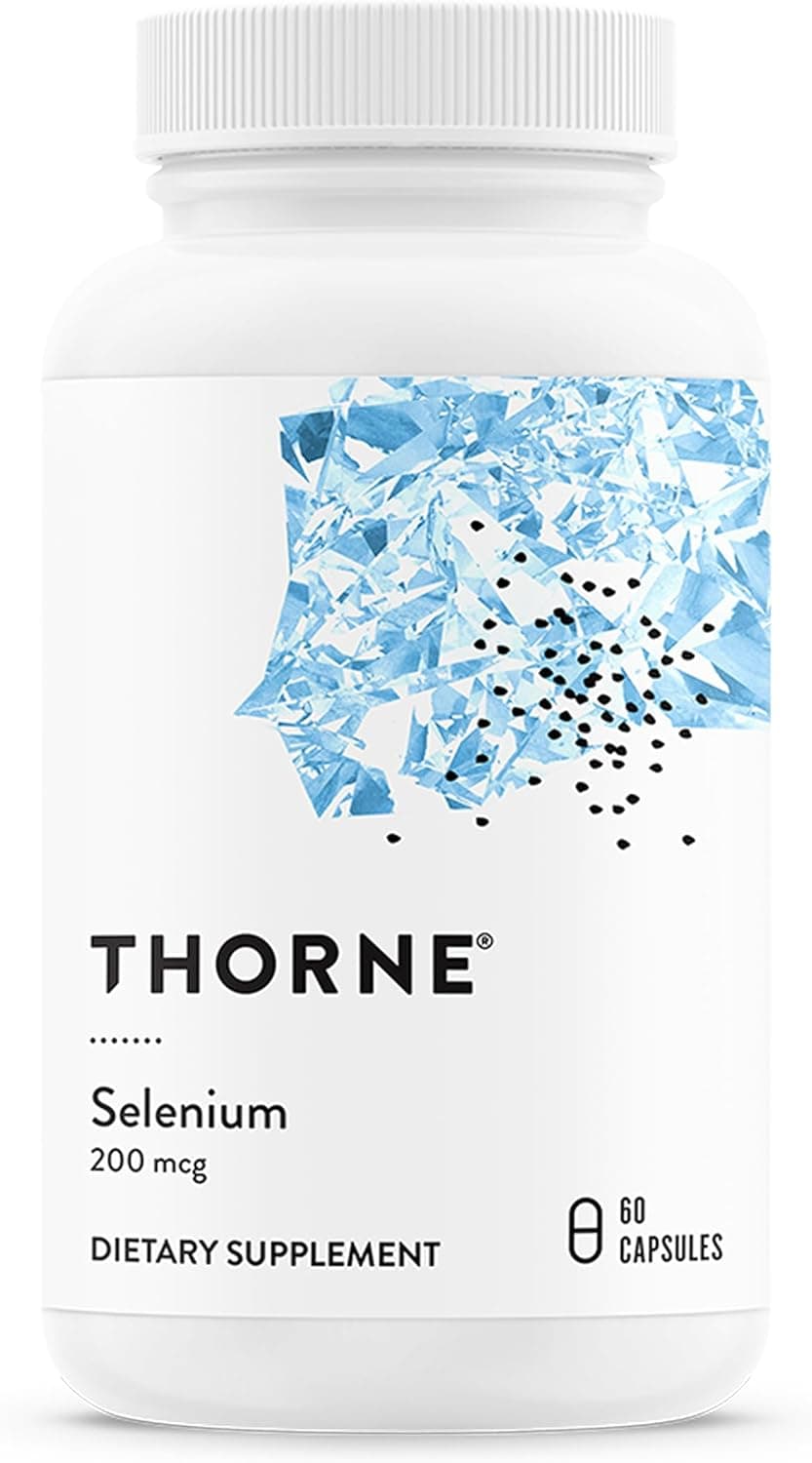
Thorne Selenium (Selenomethionine)
Thorne
The most evidence-backed product on this list — 200 mcg selenomethionine is the exact form shown to lower TPO antibodies in randomized trials.
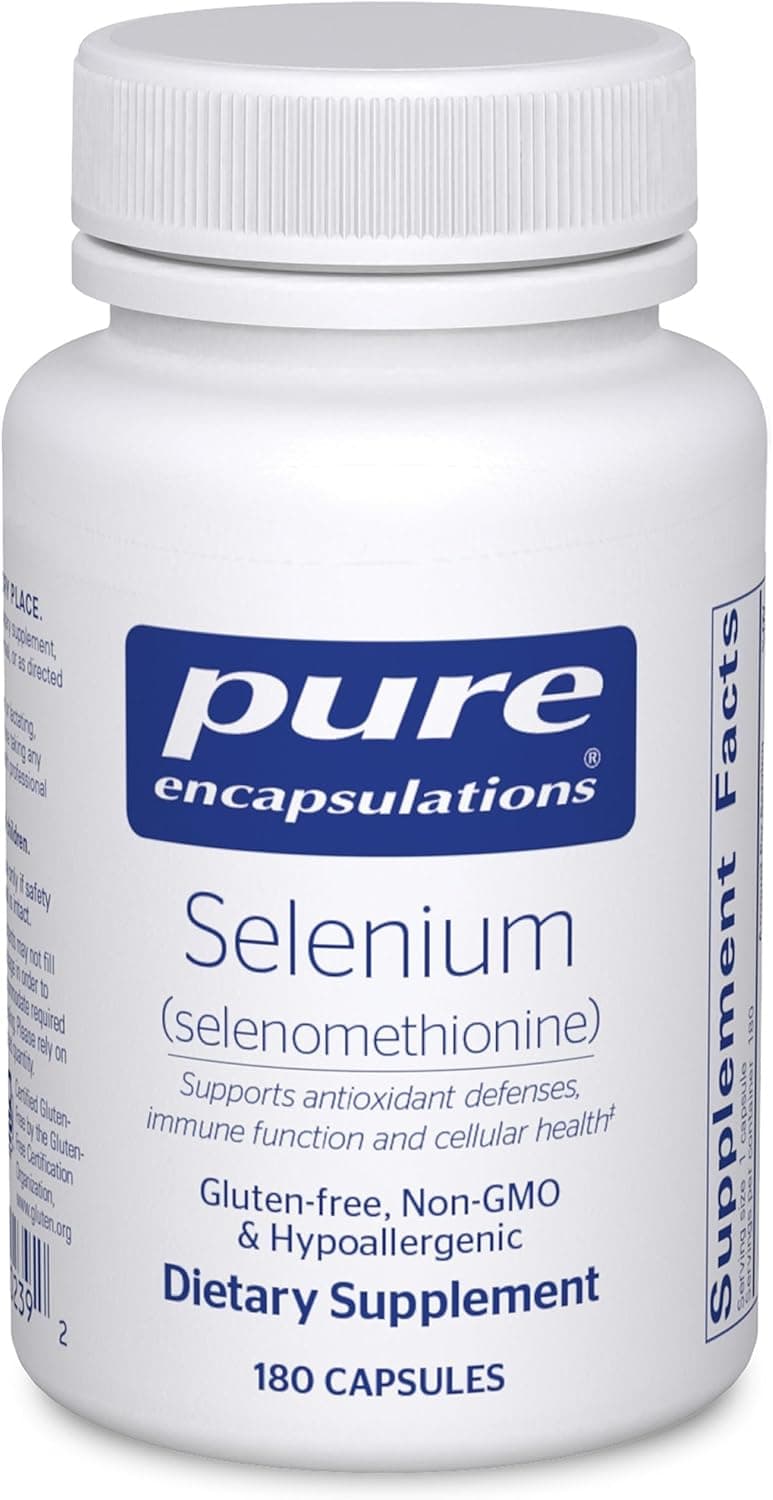
Pure Encapsulations Selenium (Selenomethionine)
Pure Encapsulations
Essentially the same clinical-grade selenomethionine as Thorne at a lower price — best value in the most critical Hashimoto's category.
Want the full picture? Read our complete Hashimoto's supplement protocol.